
Korean to English Book Translation: Why Papago and ChatGPT Aren't Enough
AI tools like Papago and ChatGPT are great for quick, simple translations, but they fall short for translating Korean books into English. Why? Because books demand more than just word-for-word accuracy. They require:
- Understanding complex grammar differences: Korean and English sentence structures are vastly different, making direct translations awkward.
- Preserving cultural meaning: Subtle elements like honorifics, metaphors, and social context often get lost.
- Maintaining the author’s voice: Literary style, tone, and character consistency are crucial for a good book translation.
- Handling long texts cohesively: AI tools struggle with consistency across hundreds of pages, leading to disjointed results.
- Addressing privacy concerns: Uploading manuscripts to AI platforms risks data security.
For books, a mix of AI efficiency and human expertise ensures accurate, nuanced translations that respect the original work. AI tools alone simply can’t meet the demands of literary translation.
How Well Can ChatGPT Translate Korean Literature? | Cover To Cover Podcast
Main Challenges in Korean-to-English Book Translation
Translating a Korean book into English is far from a simple word-for-word conversion. It's like solving a complex puzzle, where grammar, cultural nuances, style, and context must all come together seamlessly. General-purpose AI tools often fall short because they’re built for quick translations, not the intricate work required for literary texts.
Different Grammar and Sentence Structure
One of the biggest hurdles lies in the contrasting ways Korean and English sentences are constructed. Korean sentences place verbs at the end, while English positions them in the middle. This difference alone can completely alter how meaning is conveyed.
Take the Korean sentence, "나는 어제 서점에서 책을 샀다" (Naneun eoje seojeomeseo chaekeul satda). A literal translation would read, "I yesterday bookstore-at book bought." But in English, it needs to become, "I bought a book at the bookstore yesterday." While AI tools can handle this basic restructuring, things get tricky with more complex sentences.
Korean often uses long, multi-clause sentences where the main verb only appears at the end, creating a sense of suspense or rhythm. When AI tools attempt to preserve this structure in English, the result is awkward and unnatural. They struggle to decide whether to break a long Korean sentence into shorter English ones or combine multiple shorter Korean sentences into something that flows better in English.
Embedded clauses and modifiers add another layer of difficulty. Korean can stack descriptive phrases before a noun in ways that don’t translate directly into English. This often results in grammatically correct but clunky English that feels mechanical - an obvious sign of machine translation.
Missing Cultural Context
Cultural references are another area where AI translation tools stumble. Korean literature is rich with details about food, traditions, social practices, and historical events that carry deep meaning for Korean readers but may be unfamiliar to English-speaking audiences.
Food is a prime example. When a character eats samgyetang (ginseng chicken soup) during the hottest summer days, it’s not just a meal - it’s tied to the belief in balancing the body’s energy by "fighting heat with heat." AI tools often reduce this to "chicken soup", stripping away the cultural weight and leaving readers unaware of its significance.
Similarly, references to classical poetry, folk tales, or historical events often get lost in translation. AI tools tend to translate these literally, without understanding their deeper meaning or thematic importance. This can leave English readers confused or disconnected from the narrative.
Maintaining the Author's Voice and Style
Preserving an author’s unique voice is one of the toughest challenges in literary translation. Every writer has a distinct way of crafting sentences, whether through short, punchy language or long, flowing prose. Some lean on formal tones, while others embrace casual, conversational styles. This voice is what makes their work feel personal and authentic.
AI tools struggle to maintain this voice consistently across an entire book. For example, the same Korean phrase might be translated differently in Chapter 1 versus Chapter 10, disrupting the tone and pacing. A character’s speech patterns, which are crucial for defining their personality, might shift inappropriately, flattening the emotional depth of the text.
Repetition is another stylistic element that AI often mishandles. Korean authors frequently repeat phrases, sentence structures, or imagery to create thematic resonance. But AI tools treat each sentence as an isolated unit, failing to recognize these patterns and the artistic intent behind them.
Metaphors and figurative language also pose significant challenges. Korean authors often use nature imagery, traditional symbols, or wordplay that doesn’t translate directly into English. AI tools tend to opt for literal translations, turning poetic expressions into awkward or nonsensical phrases. A beautifully crafted metaphor in Korean can lose all its impact - or worse, become unintentionally humorous - in English.
Words with Multiple Meanings
Even after grappling with grammar and style, choosing the right words remains a critical challenge. Korean is full of words whose meanings shift depending on context, and this flexibility often confuses AI tools.
Take the word 마음 (maeum), which can mean "heart", "mind", "feelings", "intention", or "spirit", depending on the situation. In one sentence, it might refer to someone’s emotional state, while in another, it could describe their determination. AI tools often pick one meaning and apply it universally, even when the context demands a different interpretation.
Verbs are another stumbling block. The Korean verb 보다 (boda) can mean "to see", "to watch", "to look at", "to read", "to meet", or "to consider", among other things. AI tools frequently misinterpret these nuances, especially in dialogue where context is everything.
Pronouns add yet another layer of complexity. Korean often omits pronouns entirely, relying on context to indicate who’s speaking or acting. AI tools have to guess whether to insert "I", "you", "he", "she", or "they" into English sentences. When they guess wrong, it can confuse readers, especially in scenes with multiple characters.
Finally, the distinction between formal and informal language in Korean can completely change word choices. The same idea might be expressed with entirely different vocabulary depending on whether someone is addressing a friend, a boss, or a stranger. AI tools often miss these nuances, resulting in translations that are technically correct but socially inappropriate.
When translating an entire book, these challenges compound. A word that appears dozens of times needs consistent translation when it refers to the same concept, but flexibility when the context changes. AI tools simply lack the judgment and memory to handle these nuances across hundreds of pages, leading to inconsistencies that disrupt the reading experience.
Why Papago and ChatGPT Don't Work for Book Translation
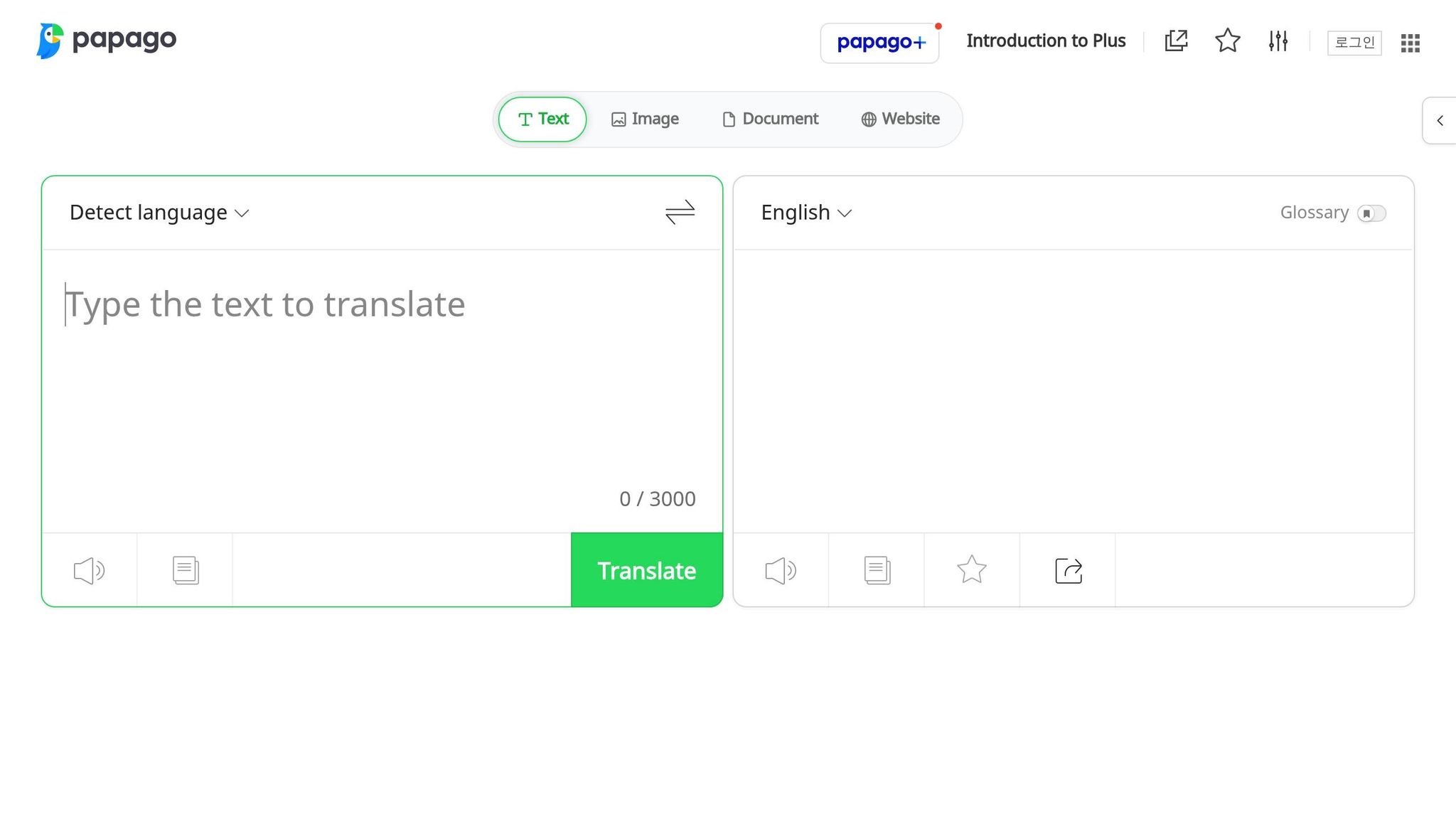
Translating Korean books into English is no small feat - it requires an understanding of cultural nuances, literary depth, and stylistic consistency. While tools like Papago and ChatGPT are great for quick translations, they fall short when tasked with the complexities of full-length literary works.
Papago Is Built for Everyday Conversation
Papago shines in day-to-day communication. Whether you're ordering food, deciphering a street sign, or sending a casual text, it gets the job done. But translating a novel, memoir, or any literary work? That’s a whole different ballgame.
Papago’s training focuses on conversational language, news, and basic informational texts. It’s not equipped to handle the intricacies of literary devices, narrative flow, or stylistic flair. For example, while it can translate everyday dialogue with ease, it often flattens out the richness of literary conversations. Characters lose their unique voices, and descriptive scenes - meant to immerse the reader - become bland and lifeless. The result? The emotional and atmospheric depth of the original text is lost.
ChatGPT, though more versatile, faces its own set of challenges when it comes to translating books.
ChatGPT Can't Handle Long Texts
Unlike Papago, ChatGPT has a broader range of capabilities, but it runs into a major roadblock with book-length translations: its context window is limited. Simply put, ChatGPT can only process a certain amount of text at one time. A typical Korean novel far exceeds this limit, forcing the translation to be broken down into smaller, disconnected chunks.
This fragmented approach introduces a host of problems. Names, like "Jisoo", might be translated differently in various parts of the text. Key terms or phrases that recur throughout the story can lose their consistency. Even narrative techniques like callbacks or foreshadowing, which rely on continuity, may be disrupted. The result is a translation that feels disjointed and lacks the cohesion necessary for a compelling reading experience.
Inconsistent Word Choice and Tone
Both Papago and ChatGPT struggle with consistency - an essential element in literary translation. The same Korean word might be translated in multiple ways, even when it refers to the same concept or idea. This inconsistency can muddle key themes or motifs that the author intended to highlight.
Tone is another area where these tools falter. A story meant to maintain a reflective, melancholic mood can end up bouncing between overly formal and casual language. Poetic passages might suddenly turn plain, breaking the immersion for the reader. These tonal shifts disrupt the narrative flow, stripping the translation of its emotional weight and resonance.
Privacy and Security Risks
Beyond quality issues, using Papago and ChatGPT for book translation raises serious concerns about privacy and intellectual property. Uploading an unpublished manuscript to these platforms means entrusting sensitive, creative work to cloud-based systems that may not guarantee robust security.
AI tools often store uploaded content, and their terms of service sometimes allow this data to be used for training purposes. This means your manuscript could be retained and potentially accessed by third parties. Moreover, these tools often route data through external providers, increasing the risk of unauthorized access or breaches.
For authors and translators, this poses not just creative risks but also legal ones. Many publishing contracts include strict confidentiality clauses that prohibit sharing unpublished works with third parties. Using AI tools without explicit permission could violate these agreements, leading to serious legal consequences.
Adding to the uncertainty is the lack of transparency around how these platforms handle data. Questions like how long your manuscript is stored or who has access to it often go unanswered. For anyone considering these tools for professional book translation, these risks underscore the need for solutions that prioritize both quality and security.
sbb-itb-0c0385d
Requirements for Quality Korean-to-English Book Translation
Translating a Korean book into English is far more complex than simply swapping words between languages. It involves a deep understanding of literary nuance and technical precision. To grasp what makes a translation truly effective, it's important to see why general-purpose tools often fall short. Here’s a closer look at what it takes to achieve a high-quality literary translation.
AI Training on Literary Works
The backbone of a strong book translation lies in how AI models are trained. General translation tools pull their knowledge from a mishmash of sources - news articles, websites, social media chatter, and casual conversations. While this broad training gives them adaptability, it doesn’t equip them for the intricate demands of literature.
Literary translation is a different beast. It requires an understanding of storytelling techniques, character arcs, thematic depth, and the deliberate stylistic choices authors make. For AI to handle this, it needs exposure to professionally translated literary works. This specialized training helps AI navigate complexities like preserving wordplay, capturing the rhythm of poetic prose, and handling stream-of-consciousness writing.
Take Korean literature, for example. Korean authors often use honorifics and speech levels to subtly convey social hierarchies and character dynamics. These aren’t just grammatical quirks - they’re narrative tools. A well-trained AI knows these elements can’t simply be converted word-for-word. Instead, they require thoughtful English equivalents, whether through dialogue tags, sentence structure, or carefully chosen vocabulary.
Consistent Voice Throughout the Book
An author’s voice is the heartbeat of their work. It’s reflected in their sentence rhythm, word choices, and unique way of painting the world. Translating a book while maintaining this voice across tens of thousands of words is no small feat.
To achieve this, full-manuscript processing is essential. It ensures stylistic continuity from the first chapter to the last. For example, if a character speaks in terse, clipped sentences early on, they shouldn’t suddenly become long-winded later unless the change is deliberate. Similarly, repeated phrases or motifs should remain consistent to preserve the author’s intent.
This goes beyond just keeping track of words. The system must understand shifts in tone or mood, like when a narrator moves from detached observation to intimate reflection. It also needs to respect narrative techniques like foreshadowing and callbacks. If a small detail in Chapter 2 becomes vital in Chapter 18, the translation must connect the dots seamlessly. Splitting the text into isolated segments makes this impossible.
Human Review and Quality Control
Even with advanced AI, human oversight is irreplaceable in literary translation. This isn’t because AI makes blatant errors - it’s because translating literature involves subjective decisions. A single passage might have multiple valid interpretations, and choosing the right one depends on understanding the author’s intent, the target audience, and the broader context of the work.
Human reviewers bring a literary sensibility that AI lacks. They ensure metaphors resonate naturally in English. They recognize when cultural references need to be adapted or explained to make sense for English-speaking readers. And, most importantly, they make sure the translation reads like a book written in English - not just a correct translation.
Quality control also involves looking at the bigger picture. Does the dialogue capture the characters’ personalities? Is the pacing smooth? Are there any ambiguities that might confuse readers? These are questions only a skilled human translator can address. The review process should involve experts fluent in both languages and experienced in literary translation. They need to read the book as a whole, experiencing it as a reader would, to catch issues that only reveal themselves in context.
Handling Full-Length Books
Translating a full-length manuscript as a cohesive unit is a key challenge that separates specialized literary translation tools from generic solutions. Korean novels typically range from 60,000 to 150,000 words, and the system must manage names, terminology, and stylistic decisions consistently across the entire text. If a character’s name appears 200 times, it should be translated the same way each time - unless the author has intentionally varied it for narrative reasons.
Full-manuscript processing also ensures smooth transitions between chapters, scenes, and structural elements. This approach maintains the book’s flow and tone, avoiding the jarring inconsistencies that can arise when sections are treated as standalone pieces.
Confidentiality is another critical factor when handling full manuscripts. Authors and publishers need reassurance that their unpublished work remains secure throughout the translation process. This requires tools specifically designed for book translation, with robust data protection measures in place. General-purpose platforms, which may retain or repurpose uploaded content, simply don’t offer the same level of security.
Finally, the architecture for full-length translation must be built to handle the unique demands of books. It’s not just about raw processing power - it’s about creating a system that can track context, maintain consistency, and preserve the formatting and literary qualities that make the original work shine.
Conclusion
Why General AI Tools Aren't Enough
While tools like Papago and ChatGPT are great for everyday tasks, they fall short when it comes to literary translation. These platforms are designed for casual use, not for the intricate demands of translating complex literary texts. They struggle to grasp the subtle nuances of Korean literature, often missing the tone, style, and depth that define an author’s work. For example, they can’t maintain a consistent character voice across a sprawling 100,000-word manuscript or differentiate between a metaphor needing creative adaptation and a simple sentence that translates directly.
Literary translation requires specialized AI systems trained on literary works - not just general internet data. These systems need to handle entire manuscripts as unified pieces, ensuring consistency in elements like character names, recurring themes, and stylistic choices. Additionally, robust security measures are crucial to safeguard unpublished manuscripts - something general-purpose tools simply don’t prioritize.
These limitations aren’t issues that can be solved with basic tweaks or workarounds. Addressing them requires a translation process specifically designed for the unique challenges of full-length literary works.
Combining AI Efficiency with Human Expertise
Given these challenges, the best approach is to combine the efficiency of AI with the expertise of human translators. The future of Korean-to-English book translation isn’t about choosing one over the other - it’s about blending their strengths to create a seamless process.
AI excels at maintaining consistency across lengthy texts, ensuring elements like terminology and formatting remain uniform. On the other hand, human translators bring the nuanced understanding needed to interpret tone, handle ambiguous passages, and ensure the author’s voice resonates in English. This partnership allows humans to focus on what they do best: making creative decisions and refining the translation to feel natural and authentic.
By working together, AI and human expertise address the core challenges of literary translation. AI handles the technical consistency, while human translators ensure the cultural nuances and emotional depth of the original work are preserved. The result is a translation that balances the speed and precision of modern technology with the irreplaceable insight of skilled literary professionals.
For authors and publishers looking to bring Korean literature to English-speaking audiences, this collaborative approach - tailored AI paired with expert human review - is the way forward. It’s a solution that respects the artistry of the original work while embracing the possibilities of technology.
FAQs
Why aren’t AI tools like Papago and ChatGPT suitable for translating complex Korean books into English?
AI tools like Papago and ChatGPT often face challenges when translating complex Korean books into English. The main hurdles? Cultural nuances, literary style, and contextual accuracy. These tools frequently misinterpret idioms, metaphors, or culturally specific references, which can distort the original meaning or strip away the emotional depth of the text.
On top of that, AI struggles to reflect an author’s distinct voice or the subtle stylistic touches that make literary works stand out. While these tools can handle basic translations well, translating an entire book demands a much deeper grasp of both languages and their cultural contexts. It’s this depth that ensures the translation stays true to the original while remaining engaging for readers.
What makes it difficult for AI tools to capture cultural nuances and the author's unique voice in translations?
AI tools often stumble when tasked with grasping cultural nuances or preserving an author's unique voice. They often miss the mark with idiomatic expressions, metaphors, and phrases that hinge on cultural context. The result? Translations that can feel lifeless, overly literal, or detached from the original meaning.
On top of that, AI struggles to truly capture the emotional layers or artistic flair woven into literary works. Sure, these tools are great at crunching through massive amounts of text. But they lack the human touch needed to adapt cultural references or maintain the subtle intricacies of an author’s storytelling style. This makes them a less dependable choice for translating books where tone, nuance, and creativity are critical.
How does combining AI with human expertise enhance Korean-to-English book translations?
Combining AI with human expertise transforms Korean-to-English book translations by blending speed with nuanced understanding. AI tools excel at generating initial drafts quickly, laying down the groundwork for translation. But it’s the human touch that brings the text to life.
Human translators step in to refine these drafts, ensuring that cultural nuances, literary tone, and context are preserved. They address the subtle meanings, idiomatic phrases, and emotional layers that AI often overlooks. This teamwork creates translations that feel fluent and natural, staying true to the original work and delivering a polished reading experience.