# 5 Marketing Tips for Translated Books
**Translated books open up access to 80% of global readers who don't primarily speak English.** But translating your book is just the first step. To truly succeed, you need to market it in ways that resonate with readers in specific regions. Here's a quick rundown of five effective strategies to help your translated books stand out:
- **Leverage Local Social Media Platforms:** Use platforms like [WeChat](https://www.wechat.com/) in China, [LINE](https://www.line.me/) in Japan, or [KakaoTalk](https://www.kakaocorp.com/page/service/service/KakaoTalk?lang=en) in South Korea. Tailor your posts with local language, visuals, and cultural preferences.
- **Optimize Metadata for Search:** Adjust titles, keywords, and categories for regional markets to improve discoverability on platforms like Amazon or Google.
- **Collaborate with Local Influencers:** Partner with book bloggers, micro-influencers, and niche communities to build trust and reach targeted readers.
- **Run Targeted Ads:** Create ads tailored for specific regions, using localized messaging, visuals, and currencies to boost engagement.
- **Host Themed Virtual Events:** Organize online events that reflect local interests, like book clubs, workshops, or live Q&A sessions.
These strategies work together to help your translated book connect with its audience, increasing visibility and sales. Start by focusing on one or two markets, and refine your approach as you go.
Key Statistics for Marketing Translated Books: Engagement and ROI Data
## Tips For Translation, Self-Publishing, And Marketing In Foreign Languages With Nadine Mutas
sbb-itb-0c0385d
## 1. Use Region-Specific Social Media Platforms
While Facebook and Instagram dominate in the U.S., social media preferences vary significantly across the globe. For instance, in **China**, WeChat serves as a multi-functional "super app", handling everything from messaging to eCommerce, while Douyin leads in short-form video content [4][5]. In **Japan**, LINE is a go-to platform for messaging, manga reading, and live streaming [4]. Meanwhile, in **South Korea**, KakaoTalk reigns supreme, offering features like webtoon integration and easy payments via KakaoPay [4]. Understanding these regional preferences is the first step to crafting effective marketing strategies.
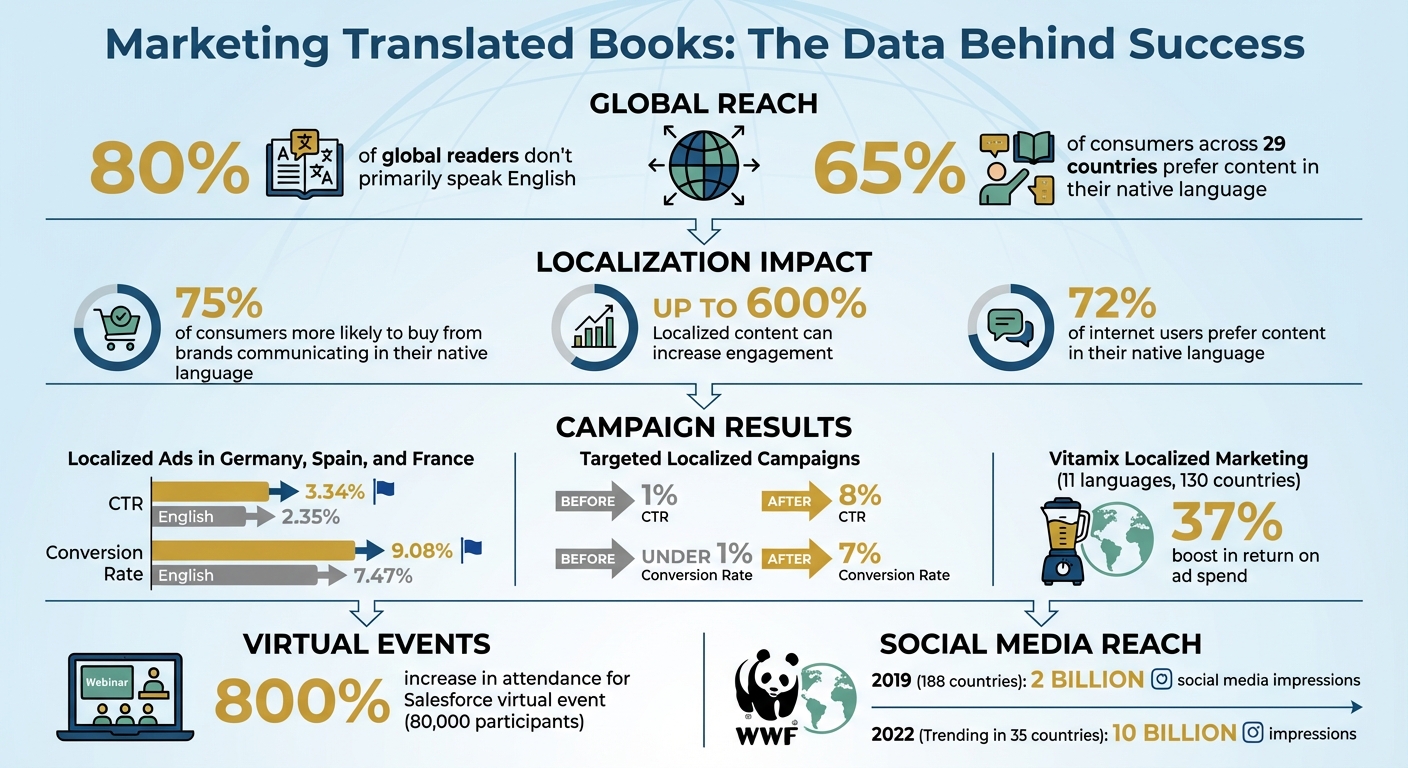
To truly connect with local audiences, it's not enough to simply translate your posts. Studies show that **75% of consumers are more likely to buy from brands that communicate in their native language** [10], and localized content can increase engagement by up to **600%** [11]. This means adapting every detail - language, visuals, hashtags, and even emojis. For example, while a thumbs-up emoji is friendly in the U.S., it can carry negative connotations in certain cultures [6].
When creating content, use *transcreation* - a mix of translation and creative adaptation - for emotionally nuanced or culturally specific messages. On the other hand, direct translation works for straightforward updates, such as release dates [6]. As Nataly Kelly, VP of Localization at [HubSpot](https://www.hubspot.com/), puts it:
> "To do business in a particular market, you need to speak their language, not in terms of simply translating your message, but in a way that evokes the same feelings your message does in your native market" [8].
It's also important to align content with local calendars and events. Instead of focusing solely on U.S. holidays, highlight celebrations like Diwali in India or Día de los Muertos in Mexico [7][8][9]. Use tools like [RiteTag](https://ritetag.com/) or [Keyhole](https://keyhole.co/) to research trending hashtags for each region, and update visuals to reflect local culture [6][8]. For a stronger connection, consider creating **separate social media accounts** for different markets, such as @IKEA_India or @IKEA_Austria [7].
Adjust your tone based on the platform and audience. For example, LinkedIn posts in Japan might require a formal tone, while Facebook content in the U.S. can be casual and conversational [9].
For authors promoting translated books, maintaining the original tone and style of your work is crucial. Tools like [BookTranslator.ai](https://booktranslator.ai/) can help ensure your promotional content resonates across languages, making your marketing efforts more impactful.
## 2. Optimize Metadata for International Search
Once you've adapted your social media efforts, it's time to focus on localizing your book's online details to match the target audience's preferences.
When translating your book, it's crucial to adjust the metadata to align with the language and cultural nuances of your target market. This localized metadata ensures your book is discoverable by readers searching in their native language on platforms like Amazon, Google, or regional online retailers.
Start by conducting keyword research in the target language. Search habits differ significantly by region, even among speakers of the same language. For instance, Spanish-speaking users might prefer "hosting económico" over the literal translation "alojamiento barato" when searching online [15]. Tools like Google Keyword Planner or Publisher Rocket, configured for specific regions, can help you identify the most relevant search terms for your audience [13]. Use this research to refine your book's titles and descriptions.
Incorporate these localized keywords into your book's title and subtitle, but make sure to retain the original spirit of the content. If you're publishing on platforms like [Amazon KDP](https://kdp.amazon.com/), remember that the title field allows up to 400 bytes, but non-Roman characters like Arabic or Chinese may use 2–4 bytes each, so plan carefully [12]. Additionally, setting your primary marketplace to the target region (e.g., Amazon.de for Germany) can improve your book's visibility [13].
Categories also play a key role. For North American markets, use BISAC subjects, and for international markets, rely on THEMA subjects to ensure your book is correctly classified [12]. A great example of successful localization is Stephen Guise's book *Mini Habits*. After tailoring the cover and metadata for Japan, it became the top-selling self-help title there. Similarly, the localized Chinese edition of the book generated over $200,000 in revenue [13].
Don't overlook the technical aspects. Translate meta descriptions, URL slugs, and image alt text. Be sure to list your translator as a metadata contributor to enhance discoverability [12][14].
For consistency across languages while preserving the original intent, tools like [BookTranslator.ai](https://booktranslator.ai) can be incredibly helpful.
## 3. Work with Local Influencers and Book Communities
Building connections with local influencers and book bloggers can open doors to audiences who might not otherwise stumble upon your translated work. These partnerships are a great way to introduce your book to niche communities in a way that feels personal and authentic.
The [Alliance of Independent Authors](https://www.allianceindependentauthors.org/) emphasizes this idea:
> "Affinity comes first. The size of the audience, reach and engagement is irrelevant until you find the right 'fit'" [18].
Sometimes, smaller is better. Micro-influencers with dedicated, niche audiences often deliver stronger results. Seek out bloggers and Bookstagrammers who focus on books like yours and whose values align with your message. Pay attention to their comment sections - this can reveal how engaged their followers truly are. This approach helps transform the momentum from your localized metadata into genuine audience connections.
One effective tactic is offering digital review copies to local book bloggers. When reaching out, use their preferred contact method and craft a short, personalized message explaining why their readers would enjoy your book. Author David Viergutz notes that collaborating with an established author in a foreign market can expand your reach by tapping into audiences already interested in similar content [16].
You can also join local Facebook groups or forums to engage with potential readers. Be genuine in your participation - only introduce your book after establishing a connection. Your translator can also help you craft shareable quotes tailored to resonate with local readers [19].
Localized partnerships can create a ripple effect. For example, in 2019, the [World Wide Fund for Nature](https://wwf.panda.org/) (WWF) worked with [Smartling](https://www.smartling.com/) to translate Earth Hour event materials into five languages. This effort generated over 2 billion social media impressions and participation from 188 countries. By 2022, they expanded to eight languages, achieving over 10 billion impressions and trending in 35 countries [17]. The takeaway? Partnering with local voices amplifies your message far more effectively than broad, one-size-fits-all campaigns.
## 4. Run Targeted Ads in Specific Markets
After connecting with local influencers, it's time to extend your reach with **targeted paid ads**. But don't just translate your existing ads - go a step further with what marketers call *transcreation*. This approach involves reworking your message to evoke the same feelings while respecting cultural differences [20] [21]. By combining localized messaging with paid ads, you can maximize your impact.
The numbers back this up. In March 2025, PPC expert Tomasz Abbott-Wieczorek showed how tailoring ad copy and landing pages for specific U.S. states led to a jump in click-through rates (CTR) from 1% to 8% and boosted conversion rates from under 1% to 7% in just six months [23]. Similarly, Appia, a mobile user acquisition firm, found that localized ads in Germany, Spain, and France achieved a 3.34% CTR and 9.08% conversion rate, compared to English ads in the same markets, which only managed a 2.35% CTR and 7.47% conversion rate [26].
**Design ads that resonate with your audience.** For example:
- Japanese audiences prefer text-heavy ads.
- Chinese consumers respond better to clear product imagery [21].
- European book markets lean toward simple visuals and clean typography.
- UK audiences expect bold, competitive designs [1].
Even colors can send different messages depending on the market [20] [21].
To increase relevance, create separate campaigns by currency (USD, GBP, EUR) for accurate reporting. Use dynamic location tags, like `{LOCATION(City)}` in Google Ads, to personalize your messaging [22] [25]. On platforms like Facebook and Instagram, refine your targeting by focusing on users who follow similar authors or have shown interest in genres related to your translated book [1].
It's also essential to have native speakers review your ad copy to ensure it aligns with local customs and avoids missteps. As [Translate.One](https://www.translate.one/) explains:
> "To localize is to humanize, and this human touch can be your competitive edge" [20].
KFC's infamous mistranslation of its slogan in Chinese serves as a cautionary tale [23]. And with 72% of internet users preferring content in their native language, properly localized ads aren't just a nice touch - they're crucial for connecting with your audience [24].
## 5. Host Virtual Events with Local Themes
Virtual events offer a fantastic way to connect directly with readers in your target market. Instead of simply translating your usual book talk, tailor these events to reflect the local culture and interests. For example, you could collaborate with a local author for a joint discussion. This not only introduces your translated work to their audience but also allows you to connect with an already engaged fanbase. Much like targeted advertising, these events help deepen your connection with local readers by fostering real-time interaction.
**Pick the right format for your audience.** Virtual book clubs are perfect for diving into specific themes or chapters, while live signings on platforms like Facebook Live encourage immediate interaction. For a more structured approach, consider workshops or webinars that tie into your book's theme. For instance, if you've translated a cookbook, you could host a cooking demo using regional ingredients. Educational books might lend themselves to localized STEM workshops or similar activities.
Be mindful of scheduling. Avoid local holidays and adapt to regional weekend patterns, such as Friday–Saturday weekends in parts of the Middle East. To ensure accessibility, use tools like remote simultaneous interpretation or live captioning. Patricia Magaz, Global Content Manager at [Interprefy](https://www.interprefy.com/), highlights the importance of this:
> "By providing events in your audience's language, you incentivise people to attend, especially because they can more comfortably listen and engage in their own language." [27]
To expand your reach, upload event recordings to YouTube so readers in different time zones can tune in later. Partnering with local bookstores or regional organizations for co-hosted virtual events can also build trust and enhance your visibility. You can make these events even more appealing by offering exclusive perks, like discussion guides or behind-the-scenes content, to attendees who purchase through these partners.
A great example of virtual events' potential comes from [Salesforce](https://www.salesforce.com/). When they moved a Sydney event online, attendance skyrocketed by 800%, reaching 80,000 participants [27]. Hosting virtual events not only eliminates geographical barriers but also creates meaningful opportunities to engage with readers who might otherwise never discover your translated work.
## Conclusion
Translating your book is just the beginning - **connecting with readers requires localized marketing**. A literal translation of your promotional content won't strike a chord with international audiences like culturally adapted messaging will. In fact, 65% of consumers across 29 countries prefer content in their native language [3]. That preference isn't just a statistic - it's a direct path to increased sales and engagement when you tailor your approach to meet readers where they are.
The five strategies discussed - leveraging region-specific social platforms, optimizing metadata for global search, collaborating with local influencers, running targeted ad campaigns, and hosting virtual events with regional appeal - work together to form a well-rounded plan. Each method targets a specific stage in the reader's journey, from discovering your book to building a sense of community around it. For example, when [Vitamix](https://www.vitamix.com/us/en_us/?srsltid=AfmBOoozHskVFEkGWkXx3-Uoy2mWgu8wuq2LOxnAz6IK_5pVR1kMtcdu) rolled out a localized marketing strategy in 11 languages across 130 countries in 2024, they saw a 37% boost in their return on ad spend [2]. This success came from pairing accurate translations with targeted marketing efforts.
At the heart of this process is high-quality translation. **BookTranslator.ai** offers an efficient way to translate EPUB books into over 99 languages, maintaining the original tone, style, and structure. With one-click translations starting at just $5.99 per 100,000 words, you can quickly produce polished versions of your book. The platform's AI ensures consistency in key elements like character names, terminology, and narrative voice - so your story feels authentic no matter where it's read.
Once your translations are ready, the real work begins: marketing your book in a way that resonates with your target audience. By tailoring your strategies to specific regions, you can create content that feels personal and relevant while making the most of your resources. Combining precise translation with localized marketing allows you to build genuine connections with readers worldwide.
Start small - choose one or two target markets, apply these strategies, and watch your translated books find their audience.
## FAQs
### Which market should I start with first?
Start by identifying where your audience is most likely to engage with your content. Dive into your sales data and evaluate your existing network - this could include social media followers, newsletter subscribers, or even your Amazon rankings across different countries. Look for markets with a strong appetite for ebooks and print books, such as Germany, Canada, or Mexico. Additionally, consider regions where your book's language or genre has already sparked interest. Focus on the areas showing the highest levels of engagement or sales potential to maximize your efforts.
### How do I find the right keywords in another language?
To identify the best keywords, prioritize **keyword localization** tailored to each target market. Rather than simply translating keywords, dig into terms that align with the language and context of the region. Pay attention to local idioms, slang, and unique search behaviors to make your content more relatable. Tools like international keyword research and SEO transcreation can help you adapt keywords effectively, ensuring they connect with local audiences and boost visibility.
### What's the best budget to test localized ads?
The right budget for testing localized ads hinges on your goals and the specific market you're targeting. A good starting point is a modest, controlled budget - typically a few hundred dollars per market. This amount lets you test various ad variations and gather enough data to assess key performance metrics like click-through rates and conversions. Be cautious not to underfund, as it could lead to unreliable insights, and avoid overspending to keep your testing efficient and cost-effective.